Travel Healthcare Nightmares: 10 Things Scarier Than Working Halloween Night
Published on October 31, 2026
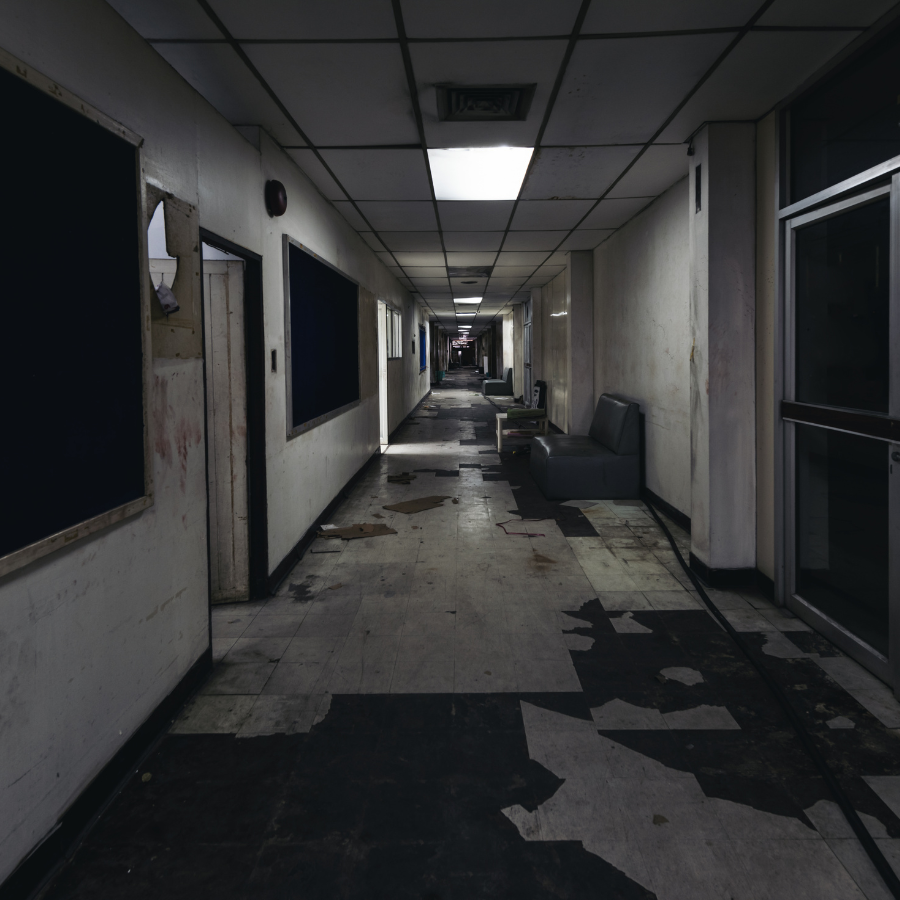
Healthcare professionals don't need haunted houses.
You've already heard a strange noise coming from an empty room at 2 a.m. You've watched a perfectly normal shift change direction approximately 30 seconds after someone commented on how calm everything seemed. You've worked during a full moon and at least briefly considered whether science has investigated the matter thoroughly enough.
Add travel healthcare to the equation, and the potential scares multiply.
Now the nightmares can follow you outside the facility too. Your furnished rental looks nothing like the pictures. Your "easy" commute turns into an hour of traffic. Credentialing suddenly needs a document you've already submitted three times.
So, in honor of Halloween, forget ghosts, zombies, and things that go bump in the night.
Here are 10 things that may be much scarier when you work in travel healthcare.
1. Someone Says, "It's Really Quiet Tonight"
Why would you say that?
Out loud?
Where everyone can hear you?
Few things unite healthcare professionals faster than someone making an observation about how calm, slow, peaceful, or quiet the shift seems to be.
Maybe you don't believe in jinxes. Maybe you're a completely rational person who understands that one coworker's choice of adjective cannot possibly influence what happens during the next several hours.
But when three things happen simultaneously five minutes later, you're still going to look at them.
They did this.
Nobody can prove otherwise.
Experienced healthcare professionals know there are some thoughts best kept inside your head until the shift is over.
"It has been a surprisingly manageable night" is one of them.
2. You Realize It's a Full Moon
You walk into work.
Something feels different.
You can't explain it yet, but the energy is strange.
Then somebody looks out the window.
"Oh. It's a full moon."
Of course it is.
Healthcare professionals have been swapping full-moon shift stories for years. Research hasn't consistently supported the idea that lunar phases cause hospital chaos, but that has done very little to weaken the legend.
Once you know there's a full moon, every unusual moment starts feeling like additional evidence.
A strange call comes in.
Full moon.
Something happens that nobody on the team has seen before.
Full moon.
The printer stops working for no apparent reason.
At this point, why not blame the moon?
Healthcare may run on evidence, but full-moon shift stories run on tradition.
3. A Patient Says, "Okay, This Is Going to Sound Weird..."
There are certain sentence openings that immediately get your attention.
"Don't be mad, but..."
"So I tried something at home..."
"I didn't think it was important until..."
And, of course:
"Okay, this is going to sound weird..."
Whatever you were expecting to hear next has now been removed from consideration.
The story could be completely harmless. It could explain exactly why the patient is there. It could take several unexpected turns before eventually reaching the important detail.
Healthcare professionals learn quickly that people arrive with complicated stories, unusual circumstances, and information they may initially feel embarrassed to share.
So you keep a straight face.
You listen.
You ask the questions you need to ask.
Then later, when someone asks how your shift went, you say, "I don't even know where to start."
4. You Finally Sit Down
You've been moving for hours.
Things are finally under control.
You have food.
You have water.
You've found a chair.
This is it.
You sit.
And somewhere in the universe, an alarm sounds.
Maybe someone needs you. Maybe a new case comes in. Maybe the phone rings. Maybe the thing you've been waiting on for three hours becomes available the exact moment you unwrap your food.
Healthcare has an uncanny ability to sense when you're about to take a break.
The same phenomenon applies to reheating food.
The first attempt is interrupted.
The second attempt is interrupted.
By the third attempt, you stop caring whether lunch is warm.
At some point, you're eating half a sandwich while standing up and wondering why you bothered bringing a lunchbox.
5. Everything Happens at the Same Time
Healthcare rarely respects the concept of spacing things out.
Nothing happens.
Nothing happens.
Still nothing.
Then everything happens.
At once.
The phone is ringing. Someone needs help. A new patient or case arrives. Another situation changes unexpectedly. A piece of equipment decides this is the perfect moment to have an issue. Someone asks you a question while you're answering a completely different question.
And somewhere in the middle of all of it, somebody needs a pen.
These are the moments when experience takes over.
You prioritize.
You communicate.
You work with your team.
You handle one thing and then the next.
Eventually, the chaos settles.
You look at the clock and realize only 14 minutes have passed.
It felt like three hours.
6. "We Float Travelers First"
You accepted an assignment for a particular department.
You've learned the workflow.
You know where everything is.
You're finally remembering everyone's name.
Then you hear the sentence:
"We float travelers first."
Floating isn't automatically a bad thing, and expectations vary widely between facilities and assignments. Many healthcare professionals are comfortable floating within areas that match their competencies.
The nightmare is finding out after you arrive that the floating expectations are very different from what you thought you accepted.
Where can travelers float? How frequently does it happen? What responsibilities will you have when you get there? Does the facility expect you to work in areas that align with your experience?
These are questions worth asking before signing the contract.
A traveler can adapt to a lot.
Unexpected surprises involving your actual job are less fun.
7. Your Furnished Rental Has "Character"
The photos were adorable.
Bright kitchen.
Comfortable bedroom.
Cute little living room.
The reviews were good.
Then you arrive.
The camera angles were...creative.
The "cozy" bedroom is approximately the width of the bed.
The couch makes a noise every time you move.
The kitchen has one fork.
There is a decorative sign that says "Gather" but nowhere you actually want to gather.
And something is making a noise at night.
Probably the refrigerator.
Definitely the refrigerator.
Right?
Temporary housing is one of the biggest variables in travel healthcare, which is why researching a property before sending money matters. Read reviews, verify the listing, understand what's included, ask questions, and make sure you know who you're renting from.
Because 13 weeks is a very long time to spend wondering what exactly lives behind the wall.
8. Credentialing Says, "We're Still Missing One Thing"
No, you're not.
You sent it.
You know you sent it.
You found the email.
There it is.
Attachment included.
Date stamped.
Proof.
And yet somehow, shortly before your start date, a message arrives saying one item is still missing.
Credentialing is a normal part of travel healthcare, and requirements can vary by assignment, facility, profession, and state. The process can involve licenses, certifications, health documentation, identification, testing, facility-specific paperwork, and other records.
That's why experienced travelers tend to develop a system.
Keep professional documents organized. Know when licenses and certifications expire. Respond to requests promptly. Keep copies of what you submit.
And maybe keep the email showing that you already sent it.
Just in case.
9. Your "15-Minute Commute" Is Actually 55 Minutes
You did the responsible thing.
You found housing near the facility.
You checked the map.
Nine miles.
Fifteen minutes.
Perfect.
Except you checked on Sunday afternoon.
Your actual commute happens Monday at 6:15 a.m., when those same nine miles apparently require crossing three dimensions and passing through every red light in the state.
Travelers learn quickly that distance and commute time are not the same thing.
Before booking housing, check the route around the times you'll actually be traveling. Look at traffic patterns, parking, construction, tolls, public transportation if you're using it, and how long it takes to get from the parking area to your department.
This matters even more if your role includes call and you have a required response time.
The beautiful apartment nine miles away isn't such a great deal when you spend nearly two hours a day staring at brake lights.
10. You Finally Love the Assignment, and It's Time to Leave
This may be the cruelest travel healthcare nightmare of all.
Week one, you couldn't find anything.
Week two, you were still learning names.
A few weeks later, you had a favorite coffee shop.
Then you found your people.
You learned the department.
You knew the shortcuts through the facility.
The person at the restaurant down the street recognized you.
Your temporary housing actually started feeling like home.
And suddenly someone says, "Can you believe you only have two weeks left?"
Excuse me?
No.
You just got here.
That's the strange thing about travel healthcare. The beginning of an assignment can feel like it takes forever because everything is unfamiliar. Once you settle in, the rest can move incredibly quickly.
Then you're packing your car, saying goodbye, and promising people you'll stay in touch.
Sometimes you extend.
Sometimes you come back.
Sometimes you leave anyway because another adventure is waiting.
But nobody warns you how difficult it can be to leave a place you couldn't wait to get comfortable in.
The Everyday Healthcare Jump Scares Deserve an Honorable Mention
Not everything earns a spot in the top 10, but healthcare is filled with tiny moments capable of briefly stopping your heart.
You probably know a few:
- The computer freezes before you saved something.
- Something crashes loudly somewhere down the hall.
- Your favorite pen disappears.
- Someone says, "Can I ask you a quick question?"
- You hear your name from across the department.
- Your food has been reheated twice and you're interrupted again.
- A supply you've used all week has suddenly moved.
- The printer makes a noise you've never heard before.
- Someone begins a sentence with, "That's never happened before."
- You reach for your badge and it isn't there.
- The phone rings the second you're about to leave.
- Someone says, "Before you go..."
No costume required.
Travel Healthcare Makes You Better at Handling the Unexpected
Travel healthcare comes with uncertainty.
New facilities.
New teams.
New cities.
New housing.
Different equipment.
Different workflows.
And yes, occasionally a full moon.
You can't predict everything that will happen during an assignment. That's part of what makes traveling challenging, and it's also part of what can make you better at adapting.
Over time, you learn which questions to ask before accepting a contract. You get better at researching housing. Your credentialing documents become more organized. You learn how to walk into an unfamiliar department, observe how the team works, and find your place.
You also learn that some things simply cannot be planned.
When those moments happen, you do what healthcare professionals have always done.
Figure out what matters most.
Lean on your team.
Handle what comes next.
And under absolutely no circumstances mention how quiet it has been.
Ready for Your Next Assignment?
There are plenty of things that can surprise you during a travel healthcare assignment, but finding your next opportunity doesn't have to be one of them.
Tags
About the Author
Scrub Society
Scrub Society is a passionate author with expertise in holidays/events. they share valuable insights and knowledge through our blog.