Thinking About Travel Interventional Radiology? Start Here
by TNAA- Travel Nurse Across America
Published on October 19, 2026
This blog was provided by TotalMed.
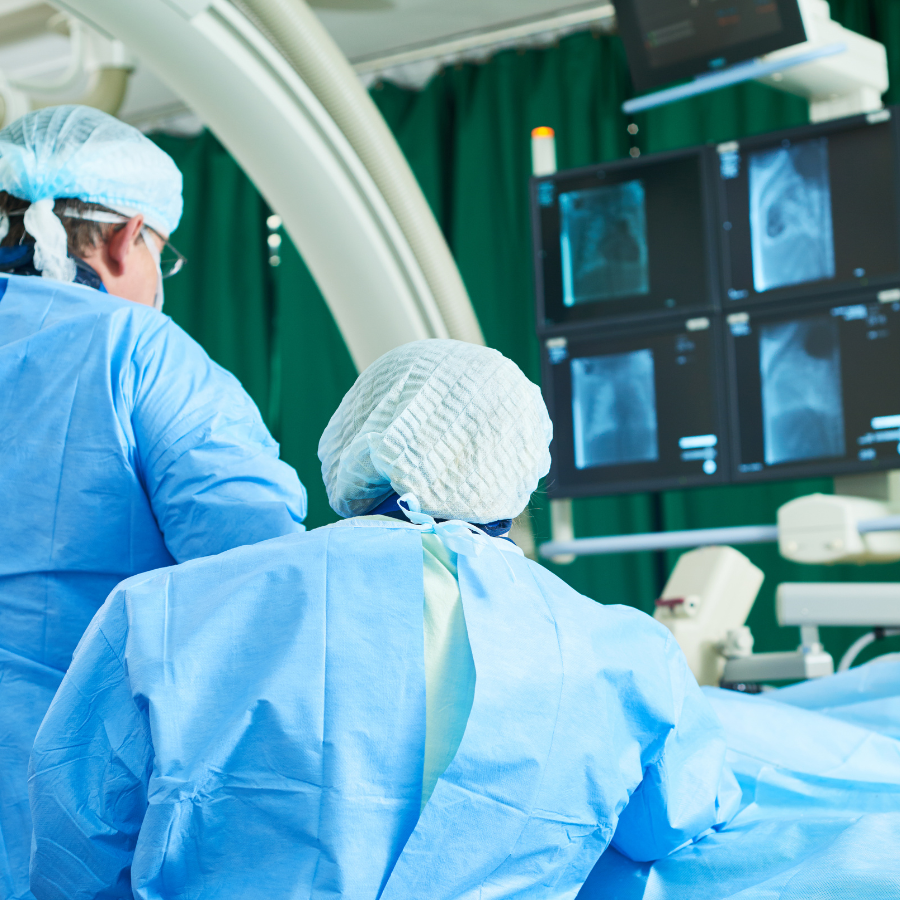
Interventional Radiology is already a specialty where no two days necessarily look the same. You may be working alongside radiologists, nurses, technologists, anesthesia professionals, and other members of the care team while supporting procedures that range from relatively routine to urgent and complex.
Take that experience on the road, and another layer gets added. Now you're doing the work while learning a new department, new physicians, new equipment, new workflows, and potentially very different expectations.
That's what can make Travel Interventional Radiology exciting for experienced IR professionals. You get to bring specialized skills into different healthcare environments, see how other teams work, and experience new parts of the country without stepping away from your specialty.
But IR departments can vary significantly between facilities. Before accepting an assignment, you need to understand more than the location, schedule, and compensation. You need to know what kind of IR environment you're actually walking into.
If you're thinking about Travel Interventional Radiology, here's where to start.
Strong IR Experience Comes First
Travel healthcare generally isn't where you learn a specialty from the beginning.
Facilities hire travelers because they need experienced professionals who can step into an existing team and become productive relatively quickly. Orientation can be shorter than what a permanent employee receives, which means a traveler needs a strong foundation before arriving.
For an IR professional, that means looking beyond the number of years you've worked in the specialty. Think about the procedures you've regularly supported, the patient populations you've worked with, the equipment you're comfortable using, and the level of independence expected in your current role.
An IR professional who has primarily worked in one type of facility may have a different background from someone coming from a large academic medical center with a broad procedural mix.
Neither experience is automatically better. What matters is whether your experience aligns with what the new facility needs.
Before pursuing an assignment, be clear about what you can confidently do and where you would need additional support.
"Interventional Radiology" Can Mean Different Things at Different Facilities
One of the most important things to understand about Travel IR is that the department name alone doesn't tell you everything about the job.
The size of the facility, patient population, trauma designation, available specialties, and how services are organized can all affect what falls under Interventional Radiology.
At one hospital, the IR department may perform a broad range of vascular and nonvascular procedures. Somewhere else, certain procedures may be handled in another department or by a different team. A large academic center may see highly complex cases that a smaller community hospital routinely transfers elsewhere.
That's why asking, "What procedures does the department perform?" is much more useful than simply confirming that the job is in IR.
Ask what procedures are common and what the facility expects a traveler to handle independently. If there are specific procedures you haven't worked with recently, be transparent about that.
The goal is not to convince the facility you can do everything.
The goal is to find an assignment where your actual experience matches their actual needs.
Understand Exactly What Your Role Will Include
Interventional Radiology depends on teamwork, but the responsibilities assigned to each team member can vary between facilities.
A traveler should understand what will be expected within their specific role.
Depending on your profession, responsibilities could involve preparing patients or procedure rooms, assisting during procedures, operating imaging equipment, monitoring patients, maintaining sterile technique, documenting care, supporting recovery, or coordinating with other departments.
Don't assume the division of responsibilities at your current facility will be identical somewhere else.
During the interview, ask what a typical day looks like for someone in your role and how responsibilities are divided across the IR team. If the description sounds significantly different from what you're accustomed to, ask more questions.
This is particularly important when a job title can cover somewhat different duties between organizations.
Ask About the Procedure Mix
The procedure mix can tell you a great deal about an IR assignment.
Rather than asking whether the facility performs "a variety of procedures," get more specific. Find out what the department does most frequently and which procedures travelers are expected to support.
Your exact questions will depend on your role and background, but the goal is to understand whether the facility's regular workload aligns with your experience.
It can also be helpful to ask whether the department supports emergency procedures and how often urgent cases occur. A busy trauma center may create a very different work environment from a smaller hospital with a more predictable procedural schedule.
If you're hoping to broaden your experience, exposure to a different environment can be valuable. Just remember that a travel contract generally isn't designed to provide extensive training in skills the facility expects you to already have.
There's a difference between learning how a new facility does something and learning how to do the procedure itself.
Call Can Completely Change the Assignment
If there is one detail you don't want to discover after accepting a Travel IR assignment, it's the call schedule.
Call expectations can have a major effect on both your work experience and your life outside the hospital. Depending on the facility, you may have weekday, overnight, weekend, or holiday call responsibilities.
Don't settle for "Yes, there's some call."
Ask what "some" actually means.
Consider asking:
- How many call shifts are typically required?
- Are weekends included?
- How are holidays handled?
- What is the required response time?
- How frequently are team members actually called in?
- How is call divided between travelers and permanent staff?
- What happens after a late call-in if you're scheduled the following day?
The answers can affect where you choose to live, whether the commute is realistic, how you plan your days off, and whether the assignment works for your lifestyle.
A beautiful rental 45 minutes from the hospital may suddenly become much less appealing if your call requirements include a 30-minute response time.
Call isn't a small detail.
Treat it like an important part of the assignment.
Your Housing Decision May Depend on Call
Most healthcare travelers think about commute when choosing temporary housing, but IR travelers with call requirements may need to give it even more attention.
Before booking housing, make sure you understand any required response time and how realistic the drive will be at different hours.
A commute that takes 20 minutes in the middle of the afternoon might take longer during rush hour. Construction, weather, parking, and the time it takes to get from your vehicle to the department can also matter.
If you're considering housing based on distance alone, check actual drive times. It can also be helpful to ask current staff where employees commonly live or which areas become difficult during peak traffic.
The perfect apartment isn't perfect if its location creates unnecessary stress every time you're on call.
Equipment and Technology May Be Different
Even experienced IR professionals can arrive at a new facility and encounter equipment, supplies, imaging systems, documentation platforms, or room setups that aren't identical to what they've used before.
That's normal.
The important part is recognizing the difference between adapting to unfamiliar equipment and being expected to use something you haven't been appropriately prepared to operate.
Ask about major systems or equipment during the interview when they're relevant to your role. If the job description mentions something specific, make sure you understand how central it is to the assignment.
Once you arrive, use orientation to learn where things are, how rooms are set up, and which facility-specific processes differ from what you're accustomed to.
Don't let the pressure to look like an experienced traveler stop you from asking how something works.
Experience means knowing your profession.
It doesn't mean automatically knowing every piece of equipment in every hospital in the country.
Pay Attention to Department Workflow
The technical side of IR is only part of what you'll be learning.
Every department develops its own rhythm.
How are cases scheduled? How are add-ons handled? How are emergencies communicated? Who prepares rooms between procedures?
How does the team coordinate with inpatient units, the emergency department, surgery, anesthesia, recovery areas, or other departments?
At your current facility, you probably know these answers without thinking about them.
As a traveler, you'll need to learn them again.
This is where strong communication becomes especially important. Ask who your primary resources are, pay attention to how the team communicates changes, and learn the department's expectations early.
The faster you understand how information moves through the department, the easier it becomes to work effectively within the team.
Team Dynamics Matter in IR
IR can be highly collaborative.
You may spend much of your shift working closely with the same physicians, technologists, nurses, anesthesia professionals, and other team members. In that environment, communication and trust matter.
As a traveler, you're joining a team that already has established routines and relationships.
You don't need to become everyone's best friend during week one. You do need to show that you're dependable, willing to communicate, and respectful of the team's existing workflow.
Listen before immediately suggesting how your previous facility did everything. There may absolutely be moments when your past experience offers a useful perspective, but first understand why the current team works the way it does.
One of the fastest ways to frustrate a new team is beginning every sentence with, "At my old hospital..."
Travel healthcare exposes you to different approaches.
Give yourself the chance to learn from them.
Find Out What Happens When the Department Gets Busy
A scheduled procedural day can change quickly.
Add-on cases appear. Emergencies happen. Procedures take longer than expected. A patient needs additional attention. The schedule starts backing up.
Ask how the department handles those situations.
You may want to know how staffing adjusts when volume increases, how emergency cases are incorporated into the schedule, and what resources are available when multiple things happen at once.
For travelers, this information can help you understand the pace of the department and how much support you can expect when things become busy.
It also gives you another opportunity to compare the facility's environment with your previous experience.
If you're accustomed to a high-volume IR department, you may thrive in that pace. If your experience has been in a smaller environment, a dramatically different workload deserves a more detailed conversation.
Ask About Orientation
Travel orientation may be shorter than what you remember from starting a permanent job.
That's one reason facilities typically want travelers with strong recent specialty experience.
Your orientation may focus on the information you need to work safely within that specific facility, such as department layout, policies, documentation, equipment, supply locations, workflow, emergency processes, and team expectations.
Ask how long traveler orientation typically lasts and what it includes.
If you're expected to be independent after a relatively short period, consider whether you're comfortable doing that based on your current experience.
You should also use orientation strategically. Don't spend the entire time trying to prove you already know what you're doing. Learn the things that are specific to this facility.
Where is emergency equipment?
Who do you call when something happens?
How do you get supplies?
What's different about their documentation?
What does the team expect from you?
Those questions can make the first independent shift much smoother.
Be Honest About What You Know
Travel healthcare rewards confidence.
It also rewards self-awareness.
If you've never worked with a particular procedure, patient population, or piece of equipment, saying so doesn't automatically disqualify you from an assignment. Pretending you have experience you don't have is a much bigger problem.
Facilities need accurate information so they can determine whether your background fits their needs.
You need accurate information for the same reason.
An assignment that stretches you slightly can be a great experience. An assignment that expects you to independently perform work outside your established competency is something entirely different.
You don't need to know everything to travel.
You do need to know what you know.
Questions to Ask Before Accepting a Travel IR Assignment
By the time you're considering an offer, you should have a reasonably clear picture of the department.
Some questions will depend on your exact profession and experience, but useful topics can include:
- What procedures does the department perform most frequently?
- What procedures will I be expected to support independently?
- What does a typical day look like in this role?
- What is the average daily case volume?
- What are the call requirements?
- What is the required call response time?
- How frequently are employees called in?
- Are weekend and holiday rotations required?
- What equipment and documentation systems are used?
- How long is traveler orientation?
- How are emergency or add-on cases handled?
- What support is available during high-volume periods?
- Will I be expected to float or work in other procedural areas?
- How are travelers typically incorporated into the team?
You don't need to ask questions simply for the sake of asking them. Focus on the answers that could change whether you accept the assignment.
The more you understand before signing, the fewer surprises you're likely to encounter after arriving.
Your First Travel IR Assignment Doesn't Have to Be the Most Challenging One
There can be pressure to make your first travel assignment a huge adventure.
Cross the country.
Choose the biggest hospital.
Go somewhere completely different.
Take the most challenging position available.
You don't have to.
For your first Travel IR assignment, there can be real value in choosing an environment that resembles what you already know. That might mean a similar facility type, familiar procedure mix, manageable call schedule, or location that isn't too far from home.
You'll already be learning how travel works. You'll be navigating temporary housing, a new team, a new facility, new systems, and a different routine.
You don't necessarily need to make every variable new at the same time.
Once you've completed an assignment and know what the travel side feels like, you can decide how much you want to change on the next one.
Is Travel Interventional Radiology Right for You?
Travel IR can be an exciting option for experienced professionals who enjoy their specialty but want more variety in where and how they work.
You may get to experience different facility types, work alongside new teams, encounter different workflows, and bring what you learn from one assignment into the next.
But successful travel isn't only about being good at the technical part of your job.
It also requires adaptability, communication, confidence, curiosity, and the willingness to be new again.
Before accepting an assignment, understand the procedure mix, call schedule, workload, equipment, orientation, team structure, and expectations for your role. Make sure the facility needs the experience you actually have.
The destination can be exciting.
The compensation can matter.
But the assignment still has to fit the professional walking through the door on day one.
Find Your Next Travel IR Opportunity
If you have strong Interventional Radiology experience and you're ready to see where your specialty could take you, start by comparing opportunities based on the work as well as the destination.
Tags
About the Author
TNAA- Travel Nurse Across America
TNAA- Travel Nurse Across America is a passionate author with expertise in travel health specialties. they share valuable insights and knowledge through our blog.