Thinking About Travel NICU? Start Here
Published on October 7, 2026
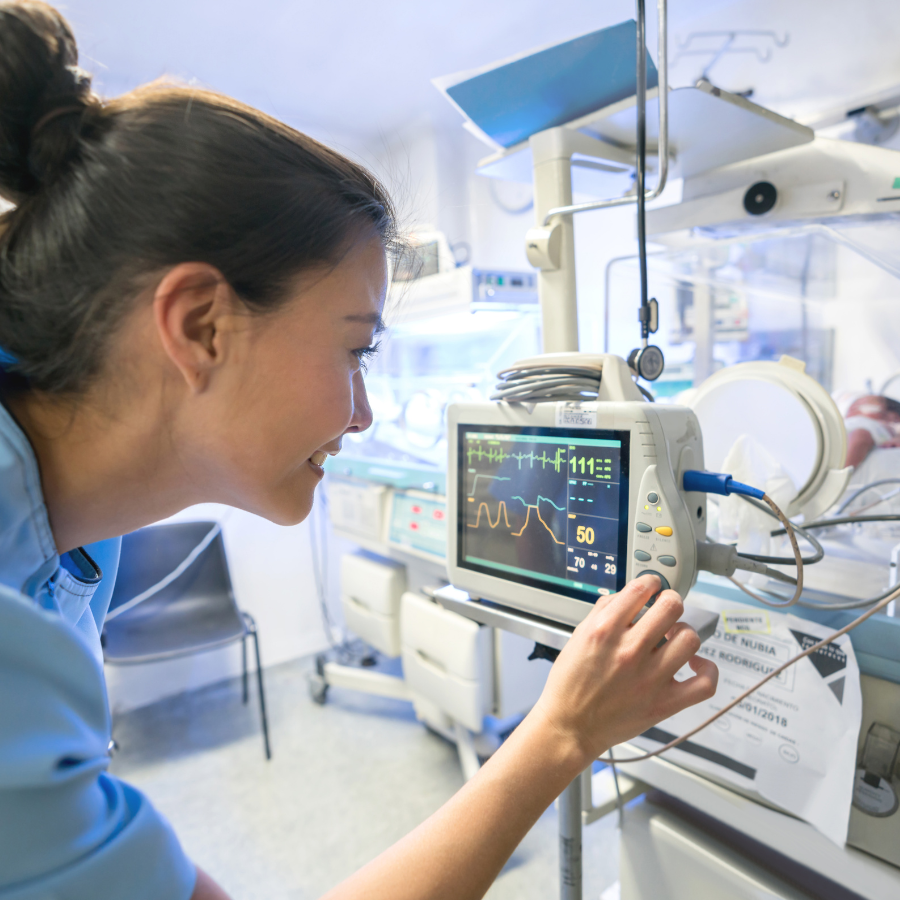
Working in the NICU requires a very specific combination of clinical skill, attention to detail, communication, and the ability to stay steady in an environment where a small change can mean something significant. When you add travel healthcare to the equation, there is another challenge: bringing those skills into a completely new facility, team, and way of doing things.
That can make a Travel NICU assignment exciting, but it also means choosing an assignment deserves more consideration than simply finding an opening in a destination you like.
NICUs can vary considerably from one facility to another. Patient acuity, NICU level, available specialists, equipment, staffing, floating expectations, and the types of cases you regularly encounter may all be different from what you're accustomed to at home.
If you're an experienced NICU nurse thinking about traveling, understanding those differences before accepting an assignment can help you find an opportunity that matches your background and comfort level.
NICU Experience Matters Before You Travel
Travel assignments generally aren't designed to teach someone a specialty from the beginning. Facilities bring in travelers because they need professionals who can contribute relatively quickly, often after a much shorter orientation than a permanent employee might receive.
That's particularly important in a specialty like NICU.
A strong NICU background gives you more than clinical knowledge. It gives you experience recognizing subtle changes, managing the pace of the environment, communicating with families, collaborating with multidisciplinary teams, and understanding how quickly priorities can shift.
Before pursuing a Travel NICU assignment, think about the experience you already have and how closely it matches the jobs you're considering. Instead of focusing only on the number of years you've worked in NICU, consider the patient populations, acuity levels, procedures, equipment, and situations you've actually handled.
An assignment that fits those skills is likely to be a smoother transition than one that requires you to work beyond your established experience.
Understand NICU Levels Before Accepting an Assignment
One of the most important details to understand is the level of NICU where you'll be working.
NICUs are generally categorized by the level of neonatal care they provide. Higher-level units typically care for increasingly complex or critically ill infants and have access to more specialized services and resources.
That distinction matters when you're evaluating a travel assignment.
A nurse with extensive experience in a lower-acuity neonatal environment shouldn't assume that experience automatically translates to every higher-acuity NICU position. The opposite is also worth considering. Someone accustomed to a large, high-acuity NICU may find that a smaller facility has different resources, workflows, responsibilities, or transfer processes.
Ask what level the unit is and, more importantly, what kinds of patients the unit regularly cares for. A label gives you useful information, but understanding the actual patient population gives you a much clearer picture of what your shifts could look like.
Find Out What Patient Acuity Looks Like
Two Travel NICU jobs can have the same title and still be very different assignments.
One unit may frequently care for extremely premature infants and medically complex patients. Another may primarily care for infants who need less intensive support before discharge. A large academic medical center may have immediate access to multiple neonatal subspecialists, while a smaller hospital may stabilize certain patients before transferring them elsewhere.
Before accepting, ask about the typical patient population and acuity.
You may want to understand whether the unit regularly cares for surgical patients, extremely low birth weight infants, babies requiring specific types of respiratory support, or other populations relevant to your experience.
This isn't about finding the "easiest" assignment. It's about making sure the facility's needs align with the skills you're bringing with you.
Ask About Assignments and Staffing
Patient assignments are another area where you don't want to rely on assumptions based on your current facility.
Ask how assignments are typically determined and what staffing generally looks like on the unit. You can also ask how patient acuity affects assignments and what happens when the census or acuity changes.
Travelers should understand how they're incorporated into the staffing model. Some units may assign travelers similarly to permanent staff once orientation is complete, while others may have different expectations.
It is also useful to ask about the resources available during your shift. Knowing who is physically present, who is available on call, and how the team responds when a patient requires additional support can tell you a lot about the working environment.
Floating Deserves Its Own Conversation
Floating can be a major consideration for NICU travelers.
A facility may expect NICU nurses to float to another neonatal or pediatric area, postpartum, newborn nursery, or another department depending on staffing needs and the nurse's competencies. Expectations vary, which is exactly why you should ask before signing.
Don't stop at, "Will I have to float?"
Ask where you could float, how frequently it happens, what responsibilities you would have in those areas, and whether travelers are typically floated before permanent staff. If a potential float area is outside your recent experience, that's something worth discussing before you arrive.
You want to understand what you're agreeing to while you still have the opportunity to decide whether the assignment fits you.
Orientation May Be Shorter Than You're Used To
One of the biggest adjustments for first-time travelers is how quickly they may be expected to get oriented.
As a permanent employee, you may have had a lengthy onboarding process when you started in NICU. A travel assignment can be very different. Orientation may focus primarily on the facility, documentation system, department-specific processes, policies, equipment differences, and other information you need to function within that particular unit.
That's why strong specialty experience matters.
You're not learning how to be a NICU nurse. You're learning how to be a NICU nurse there.
Before your first shift, pay close attention to the things that differ from your previous facility. Learn where important supplies are located, how emergencies are handled, who to contact for different needs, and what facility-specific procedures you need to know.
And ask questions. Being experienced doesn't mean pretending you already know how an unfamiliar hospital operates.
Technology and Equipment Can Be Different
Traveling also means becoming comfortable with the possibility that the equipment or systems in your new unit won't be identical to what you've used before.
The electronic health record may be different. Pumps, monitors, respiratory equipment, feeding systems, medication processes, or other technology may vary by facility.
You don't need to have used every brand of equipment that exists to be a successful traveler, but you do need to recognize when something is unfamiliar and ask for appropriate guidance before using it.
During the interview process, ask about major systems or equipment when they're relevant to your specialty. If a job posting mentions experience with something you haven't used, don't assume it's unimportant. Clarify how central it is to the role.
Adaptability is valuable in travel healthcare, but adaptability includes knowing when you need additional information.
Family Communication Is Still a Major Part of the Job
NICU care isn't limited to the infant in front of you.
Families may be navigating fear, uncertainty, exhaustion, difficult decisions, and a healthcare environment they never expected to enter. Some have been in the NICU for weeks or months. Others may have arrived only hours ago and are still trying to process what's happening.
As a traveler, you're entering an established care team, but families don't necessarily distinguish between "traveler" and "permanent staff." You're one of the people caring for their baby.
The ability to communicate clearly and compassionately remains just as important on assignment as it was in your permanent role. In some cases, you may also need to quickly learn how your new facility handles family education, visitation, rounds, discharge preparation, and communication with the broader care team.
Clinical confidence gets you through the door. The human side of NICU nursing remains just as important once you're there.
Consider the Entire Care Team
Before accepting a Travel NICU assignment, it can help to understand what the multidisciplinary team looks like.
Depending on the facility and level of care, you may work alongside neonatologists, neonatal nurse practitioners, respiratory therapists, pharmacists, lactation specialists, social workers, dietitians, therapists, surgeons, and other specialists.
The availability of those resources can differ between facilities, especially when comparing large academic centers with smaller hospitals.
Ask enough questions to understand the environment you're entering. If you're accustomed to having certain resources immediately available, find out whether the new facility operates the same way.
Differences don't necessarily make one environment better or worse. They can, however, change what your role looks like.
Think About Whether You're Comfortable Being New Again
This is one of the less obvious parts of becoming a traveler.
You may be extremely experienced in NICU and still feel brand new during the first few shifts of an assignment.
You won't know where everything is. You may not know anyone's name. You'll be learning a new charting workflow, finding supplies, figuring out how the team communicates, and discovering the little processes nobody thinks to explain because everyone else has been doing them for years.
That can be humbling when you're accustomed to being the person others come to with questions.
It doesn't mean you're suddenly less experienced. It means you're experienced and new to that particular environment.
Travelers who can be confident in their skills while remaining willing to ask questions often have an easier time navigating that transition.x
Ask Better Questions Before You Say Yes
The interview is your opportunity to learn whether the assignment actually matches your experience and expectations.
In addition to compensation and schedule, consider asking questions such as:
- What level is the NICU?
- What patient populations and acuity levels are most common?
- What experience are you looking for in a traveler?
- What does a typical patient assignment look like?
- How are assignments adjusted based on acuity?
- What are the floating expectations?
- Where could I be expected to float?
- How long is traveler orientation?
- What documentation system does the facility use?
- Are there specific equipment competencies expected?
- What resources and specialists are typically available?
- How are travelers incorporated into the unit?
- What are the weekend, holiday, and call requirements, if applicable?
You may have additional questions based on your own experience. That's a good thing.
The goal isn't to ask every possible question. It's to identify the things that could materially change whether the assignment is a good fit.
Your First Travel NICU Assignment Doesn't Have to Be the Biggest Leap
It's easy to assume that becoming a traveler means you need to immediately choose the most challenging assignment or move across the country.
You don't.
Your first Travel NICU assignment can be relatively close to home. It can be at a facility that resembles the environment where you already work. It can involve a patient population that closely matches your existing experience.
Starting with a strong match can give you room to learn the travel part of travel healthcare without simultaneously trying to adjust to a dramatically different clinical environment.
Once you've completed an assignment and understand how you respond to new facilities, shorter orientations, temporary housing, and life away from home, you may feel ready to expand your options.
Travel healthcare isn't a competition to see who can go the farthest or take the most challenging assignment.
The goal is to find work that fits your skills, goals, and life.
Is Travel NICU Right for You?
Travel NICU can give experienced nurses an opportunity to take their specialty into new healthcare environments, work with different teams, experience new places, and continue building their careers.
It also requires adaptability.
You'll need to be comfortable asking questions, learning new systems, entering established teams, and adjusting to facility-specific expectations while still providing the level of care your patients and their families need.
Before accepting an assignment, look beyond the destination and compensation. Make sure you understand the NICU level, patient acuity, floating expectations, orientation, schedule, equipment, and resources available to you.
The best Travel NICU assignment isn't simply the one with the most exciting location.
It's the one where what the facility needs and what you know how to do are a strong match.
Find Your Next Travel NICU Opportunity
If you have strong NICU experience and you're ready to see where it could take you, start by exploring the opportunities available and comparing assignments based on more than location alone.
Tags
About the Author
Scrub Society
Scrub Society is a passionate author with expertise in travel health specialties. they share valuable insights and knowledge through our blog.